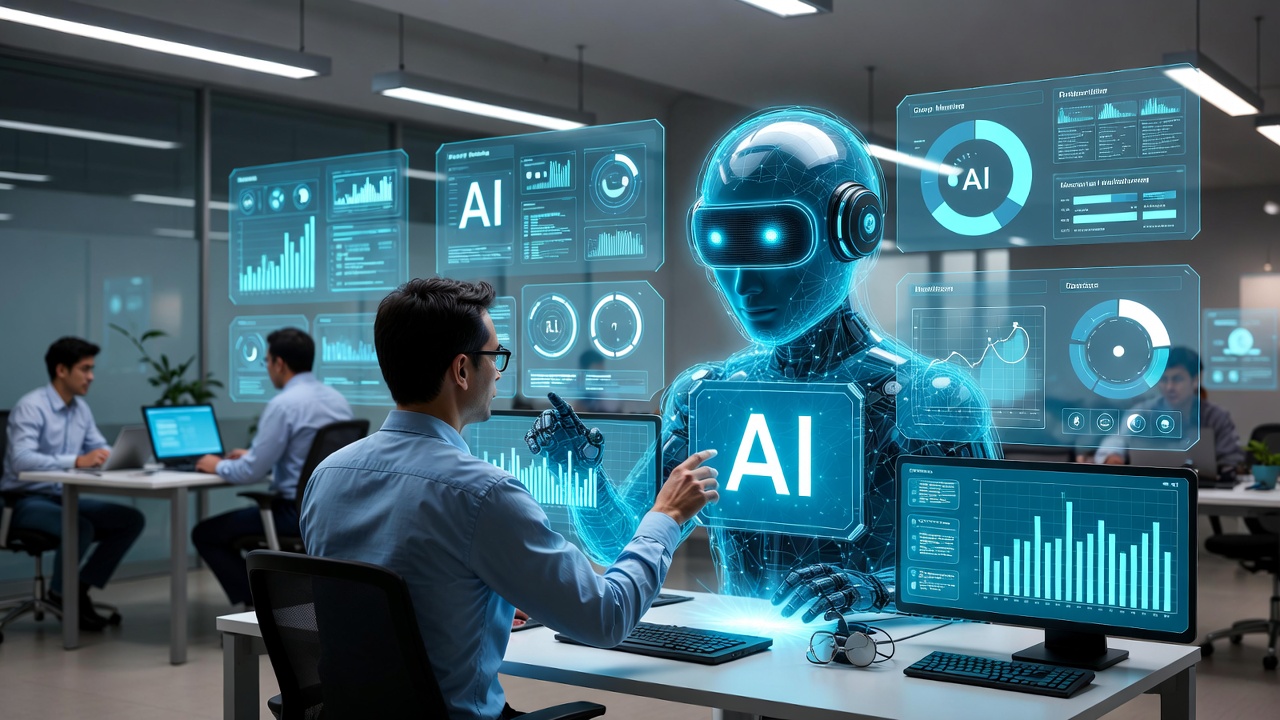

Artificial intelligence (AI) is no longer just an experimental technology—it has become a central element of digital marketing. AI-based tools, especially generative models, are capable of automating workflows that previously required human expertise and significant time investment, such as content creation, campaign optimization, data analysis, and customer support.
In recent years, the adoption of AI in the digital marketing activities of mid-sized and large enterprises has grown rapidly. Between 2023 and 2025, a significant proportion of marketers already used some form of AI tool for their campaigns and analytics.
Why Are AI Tools More Efficient Than Human Labor?
Automated Data Processing and Predictive Capabilities
AI can process millions of data points rapidly and identify patterns—tasks that would take humans weeks can be completed by AI in seconds. This is particularly valuable for campaign data analysis, audience segmentation, and trend forecasting.
Automated Content Generation
Generative AI models can create blog posts, social media content, emails, or visual assets quickly and at scale—automating tasks that previously required extensive human effort. As a result, the time required for marketing copywriting and image generation is significantly reduced.
Cost Efficiency
With AI tools, marketing teams can reduce spending on external agencies, freelancers, or internal labor hours, as many routine tasks are automated. Some companies, for example, have reduced creative content production time from eight weeks to just a few days through AI-based image generation, cutting costs by up to 90%.
Focus on Strategic, Value-Creating Tasks
AI tools take over repetitive and time-consuming tasks, allowing human professionals to dedicate more time to strategic planning, creative direction, and customer relationship management. Research shows that human–AI teams can achieve higher productivity than human-only teams, while humans handle fewer routine activities.
AI Is Cheaper Than Human Labor – But How?
Scalability: AI systems can manage and optimize multiple campaigns simultaneously, whereas each additional campaign requires more time and cost from human teams.
Automated Decision-Making: AI-driven algorithms can adjust ad spend, audience targeting, and bidding strategies in real time, reducing waste and increasing return on investment (ROI).
Reduced Human Resource Requirements: Since AI performs time-intensive analyses and generates base-level content, fewer people are needed to produce the same output.
Global Internet Trends in AI Usage
Increasing AI Adoption in Marketing
International surveys show that AI usage in marketing now exceeds 70–80% among digitally advanced organizations, and most CMOs report clear ROI from AI implementation.
AI Tools in Everyday Internet Interactions
AI-powered systems are not only used by marketers but are increasingly present in everyday internet usage. Chatbots, personalized recommendations, automated customer service responses, and search tools are becoming standard features. As a result, internet users encounter AI-driven content and services more frequently.
Growing Volume of AI-Generated Content Online
The rise of AI tools has led to an increasing amount of automated content appearing online—sometimes, according to critics, in excessive quantities and at lower quality.
Trend: Data-Driven and Automated Decisions
In marketing, the AI trend extends beyond content creation toward real-time decision-making and personalized user experiences. AI can rapidly analyze market data, predict customer behavior, and instantly optimize campaigns.
Human + AI = More Effective Marketing
While AI offers remarkable efficiency and cost advantages, it is important to emphasize that it does not replace entire human jobs. Instead, it takes over repetitive and time-consuming tasks, enabling marketers to focus on more creative and strategic work. The future of marketing will be defined by collaboration between human intelligence and artificial intelligence.